Filling or Crown? When Do Inlays and Onlays Come Into Question?
As structure loss increases, the limits of a direct filling are reached. What criteria guide the decision between a filling, an inlay/onlay and a crown?
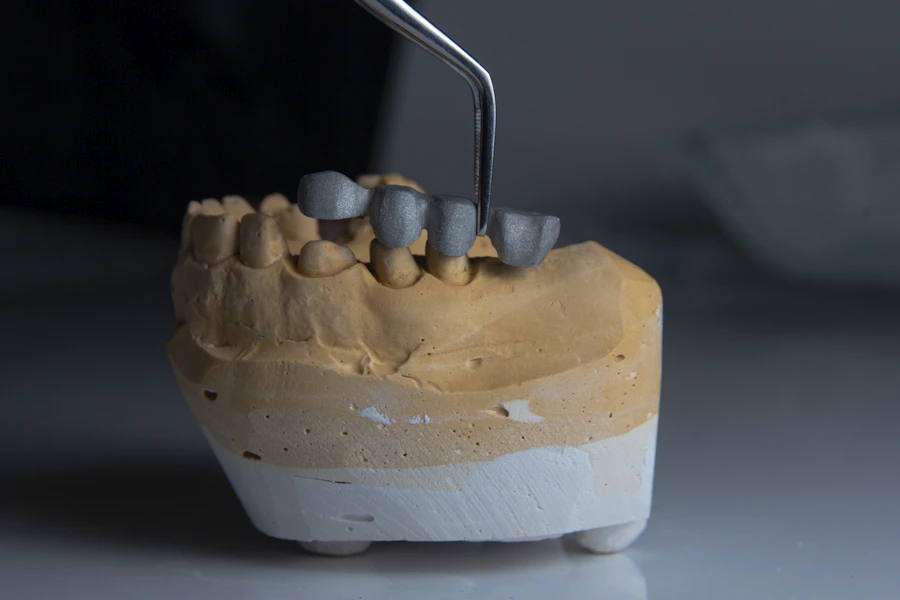
What Determines the Decision: Remaining Tooth Structure
The answer to "should it be a filling or a crown?" depends less on the size of the decay than on how much sound tooth remains. A core principle of modern dentistry is to preserve sound tissue as far as possible. The decision is therefore made on the basis of the most conservative option that is sufficient, rather than the most durable one.
Where does the limit of a direct filling begin?
Composite fillings are placed layer by layer in the mouth and cured with light. They are quite successful for small and medium-sized losses. As the cavity grows, however, two issues become pronounced: the material shrinks somewhat as it sets, which can lead to marginal gaps over wide areas, and it becomes harder to shape the contact point with the neighbouring tooth and the chewing surface anatomy correctly inside the mouth.
Where do inlays and onlays sit in between?
These restorations are produced outside the mouth in the laboratory from an impression, then bonded to the tooth. Because the work is done on a model, the contact point and cusp anatomy can be created in a more controlled way, and the shrinkage issue is eliminated.
- Inlay: Sits within the space between the cusps and does not cover them.
- Onlay: Extends to include one or more cusps when the loss of structure reaches them.
Neither surrounds the tooth completely — this is the fundamental difference from a crown.
When does a crown become unavoidable?
If most of the tooth walls have been lost, if the remaining walls are too thin to withstand chewing forces, or if there is a fracture line in the tooth, a restoration that surrounds the tooth may be required. Crowns also frequently come into question for root-treated posterior teeth because of increased brittleness.
For details of the inlay and onlay procedure see our related treatment page, and for crown options our zirconia crown page.
Old large fillings
Decay can progress beneath wide fillings placed years ago, or a gap may form at the filling margin. When these fillings are replaced the cavity usually becomes larger still; this is the point at which considering an inlay or onlay instead of a direct filling becomes meaningful.
Other criteria in the decision
Alongside the number and thickness of the remaining walls, the position of the tooth, the occlusal relationship with opposing teeth, the presence of a clenching habit and gum health are also assessed. Different decisions may be made for two losses of the same size in different people.
This article is for general information purposes and does not replace a clinical examination. The right type of restoration for your tooth is determined after clinical examination and, where necessary, radiological assessment.
Frequently Asked Questions
When is a filling no longer enough?
Once the loss of structure reaches the cusps of the tooth and the remaining walls have thinned, a filling placed in layers in the mouth cannot support the tooth adequately against fracture. As the width of the filling approaches the width of the tooth, the risk of fracture increases. At this point options produced outside the mouth, such as inlays, onlays or full coverage, come into question. The thickness of the remaining walls determines where the limit lies.
Does a large filling break the tooth?
The filling itself does not break it, but a wide filling means the tooth has less structural support of its own. During chewing the cusps are stressed apart from one another and a crack may form over time. This risk is higher in root-treated teeth, as the tooth has both lost its blood supply and had more tissue removed.
Should old amalgam fillings be replaced?
Replacing an amalgam filling that is not leaking, whose margins are intact and beneath which there is no decay simply because it is old is not advised; each replacement means a further loss of sound tissue. Replacement comes into question where there is leakage at the margin, decay beneath it, fracture, or a crack in the tooth. Aesthetic preference can also be a reason; in that case the decision is made together with the patient.
What should I do if a filling falls out?
Do not place anything in the space yourself. Clean the area gently, avoid chewing on that side and make an appointment as soon as possible. Exposed tooth tissue is both sensitive and open to decay progressing quickly. If there is pain, swelling, or a sharp edge injuring the tongue, do not wait.