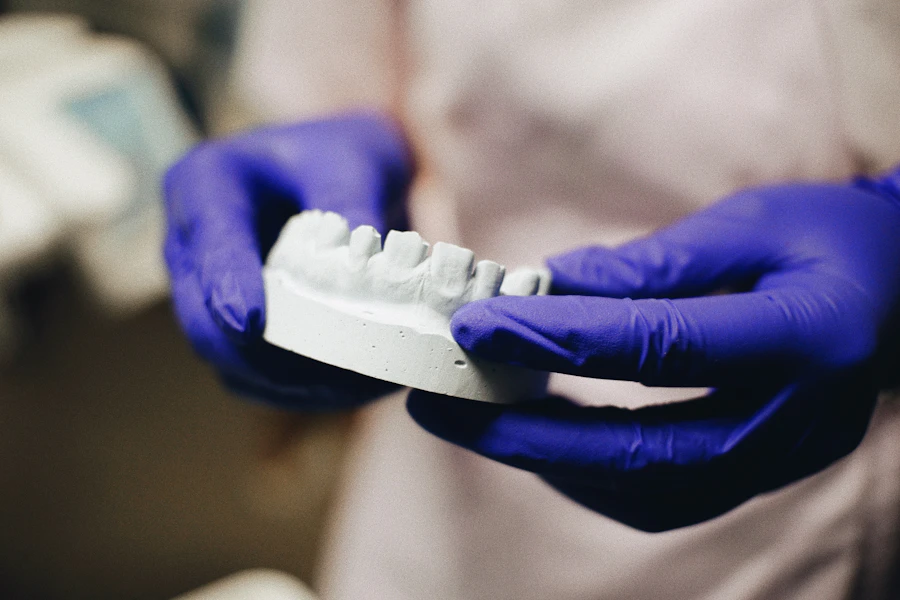
Laminate Veneers
Thin porcelain restorations applied to the front tooth surface.
Difference Between Veneers and Crowns
A crown surrounds the tooth on all sides, whereas a veneer covers only the visible front surface. The amount of tooth structure removed in veneer applications is therefore generally more limited. Which option is suitable depends on the current condition of the tooth.
Assessment and Planning
In anterior restorations, the lip line, smile line, gum level and occlusal relationship with opposing teeth are evaluated together. Digital design or trial stages may be used during planning.
Situations That May Not Be Suitable
Teeth with extensive structure loss, untreated gum disease, uncontrolled clenching or grinding habits and pronounced occlusal disorders are situations in which veneers may not be suitable. In such cases the underlying issue needs to be addressed first.
Possible Disadvantages
Placing a veneer often involves removing a thin layer of enamel from the front of the tooth; this cannot be undone. A ceramic veneer can fracture or come off, and clenching, nail biting or biting hard objects increase this risk. A fractured veneer is usually replaced rather than repaired. Temporary sensitivity may occur after the procedure. For these reasons, the decision on veneers is weighed together with alternatives such as composite bonding.
Frequently Asked Questions
Is the tooth reduced for a laminate?
In laminate applications only a thin layer is removed from the front surface of the tooth; the tooth is not reduced all around as it is for a crown. The amount removed varies with the technique chosen and the current position of the tooth. Teeth positioned inwards may need less preparation, those positioned outwards more. Applications involving no reduction at all are not possible in every case; this is determined by examination.
Is a laminate or a zirconia crown more suitable?
The two answer different problems. A laminate covers only the front surface of the tooth and is considered for irregularities of shape and colour in the anterior region where loss of structure is limited. A zirconia crown encircles the tooth and comes into question where there is extensive structure loss, a root-treated tooth, or a planned bridge. The amount of remaining tooth tissue is the decisive criterion.
How long do laminates last?
How long a restoration remains in the mouth cannot be committed to in advance. The principal factors in this region are whether a clenching or grinding habit is present, the bite relationship, oral hygiene and gum health. An uncontrolled clenching habit can cause fracture in thin ceramic restorations; the plan therefore covers not only the restoration but also the source of the force.
Is there sensitivity after laminates?
Because a thin layer is removed from the surface, the dentine beneath may be temporarily stimulated and short-lived sensitivity to cold can occur. This usually diminishes within days. Sensitivity that persists, concentrates on a single tooth, or continues after the stimulus is removed may indicate a separate cause and requires assessment.
The information on this page is for general information purposes and does not replace a clinical examination. The suitability, duration and alternatives of treatment can only be determined by your dentist after clinical and, where required, radiological evaluation.
This treatment is carried out at the clinic in Yeşilbahçe, Muratpaşa, Antalya. Location and directions.