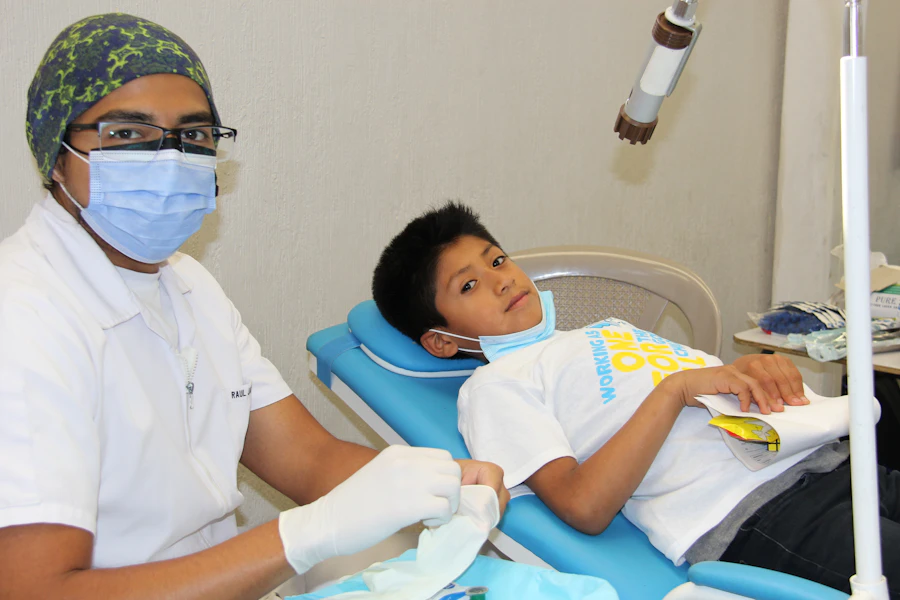
Paediatric Dentistry
Monitoring of the primary dentition and preventive applications.
The First Dental Visit
It is generally recommended that the first visit takes place in the period following the eruption of the first primary tooth. Early check-ups are useful both for monitoring oral health and for helping the child become familiar with the clinical setting.
Preventive Applications
Fluoride applications and sealing of the deep grooves on the chewing surfaces of molars (fissure sealants) may be considered to reduce the risk of decay. The need for these applications is determined according to the child's caries risk.
Why Are Primary Teeth Important?
Beyond chewing and speech functions, primary teeth hold space for permanent teeth. If lost early, the position of the underlying teeth may be affected, which makes follow-up important.
Home Care Habits
Establishing toothbrushing as a habit at an early age, reducing the frequency of sugary food consumption and cleaning the mouth after night-time feeding help reduce the risk of decay.
Frequently Asked Questions
Should decay in baby teeth be treated?
Yes. It is often assumed that treatment is unnecessary because baby teeth will be lost anyway, but as decay progresses it causes pain and infection and affects chewing and nutrition. Beyond that, a baby tooth preserves the space for the permanent tooth beneath it; if lost early, neighbouring teeth can drift into the gap and narrow the space available. Infection can also affect the developing tooth germ below.
Is fluoride used in children?
Fluoride strengthens the enamel and reduces the risk of decay, and it is used at a concentration appropriate to the age. In young children the amount of paste and control of swallowing matter, so brushing should be carried out under adult supervision. The concentration, frequency and whether additional preventive measures are needed are determined according to the child's risk of decay.
What can be done for a child who is afraid of the dentist?
Making the first visit an introductory one rather than a response to a painful complaint usually makes the process easier. Phrases used at home such as "it will not hurt" or "there are no needles" generally have the opposite effect, because they introduce those ideas to the child. Scheduling the appointment for a time when the child is rested also helps. At the clinic, each step is explained as it proceeds.
What is a fissure sealant and is it necessary?
A fissure sealant is the filling of the deep grooves on the chewing surface of the molars with a flowable material. These grooves can be too narrow for toothbrush bristles to reach and are common sites where decay begins. The procedure does not require cutting the tooth. Whether it is needed is determined at examination according to the anatomy of the tooth and the child's risk of decay.
The information on this page is for general information purposes and does not replace a clinical examination. The suitability, duration and alternatives of treatment can only be determined by your dentist after clinical and, where required, radiological evaluation.
This treatment is carried out at the clinic in Yeşilbahçe, Muratpaşa, Antalya. Location and directions.