Aesthetic Dentistry
Zirconia crowns, laminate veneers and smile design procedures.
Why Aesthetic Dentistry?
Teeth that become discoloured, misshapen or spaced over time can affect appearance and, in some cases, chewing function. Aesthetic dentistry aims to correct these differences with methods that preserve as much tooth tissue as possible.
Personalised Smile Design
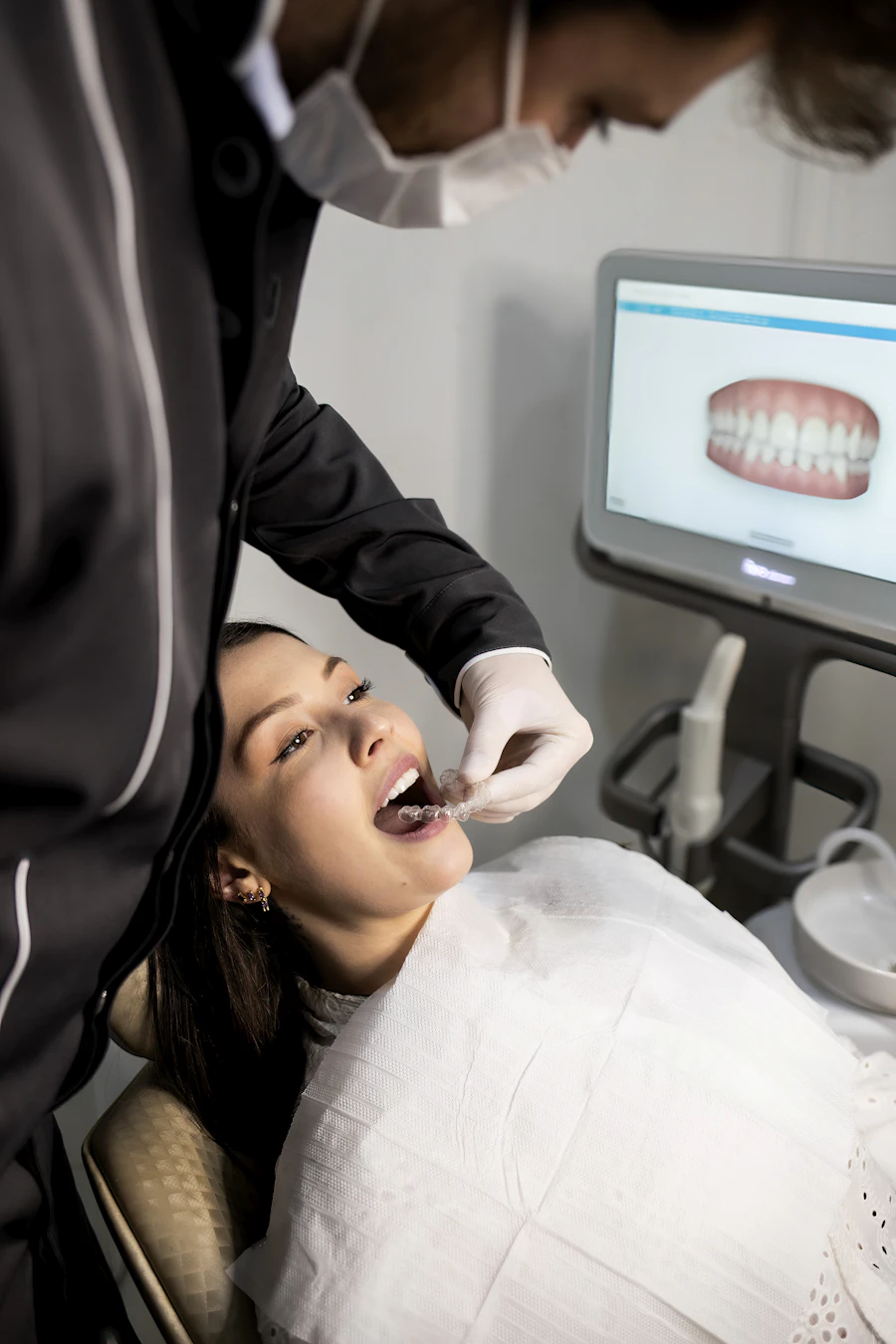
Rather than a one-size-fits-all tooth form, the plan is prepared digitally, taking facial features, lip structure and tooth proportions into account. The planned change can therefore be reviewed together before treatment begins.
Materials Used
Biocompatible ceramic materials such as zirconia and e-max, whose light transmission is close to that of natural teeth, are used. These metal-free materials aim for an appearance close to natural teeth; which material is suitable depends on the condition of the tooth.
Frequently Asked Questions
Is smile design a single procedure?
No. Smile design describes the planning together of differences in the shape, colour and position of the teeth and in the gum level. The plan may include whitening, composite applications, laminate or crown restorations, adjustment of the gum level and, where required, orthodontic alignment. Which steps are needed varies between individuals; what is common is that the procedures are planned as a whole rather than one by one.
How is the planning carried out?
The process begins with photographic and impression records. The proposed shape and position of the teeth is worked out digitally on the images; in suitable cases this plan can be tried in the mouth as a temporary mock-up. Changes to shape and length can therefore be made before moving to the definitive work. The feasibility of the plan depends on the remaining tooth tissue and gum health.
Does everyone get the same result?
No, and this should not be expected. The result is shaped individually according to the lip line, gum level, facial proportions, remaining tooth tissue and the bite relationship. The same appearance seen in another person cannot be targeted. Planning is therefore based on the patient's own anatomy rather than on example images.
Do healthy teeth have to be cut?
The amount of reduction required varies with the method chosen. For colour and minor shape irregularities, composite applications can be carried out with almost no removal of tooth tissue. Laminate applications remove only a thin layer from the front surface. Full coverage requires more tissue to be removed from around the tooth. The aim is to identify the least invasive option that achieves the result.
The information on this page is for general information purposes and does not replace a clinical examination. The suitability, duration and alternatives of treatment can only be determined by your dentist after clinical and, where required, radiological evaluation.
This treatment is carried out at the clinic in Yeşilbahçe, Muratpaşa, Antalya. Location and directions.