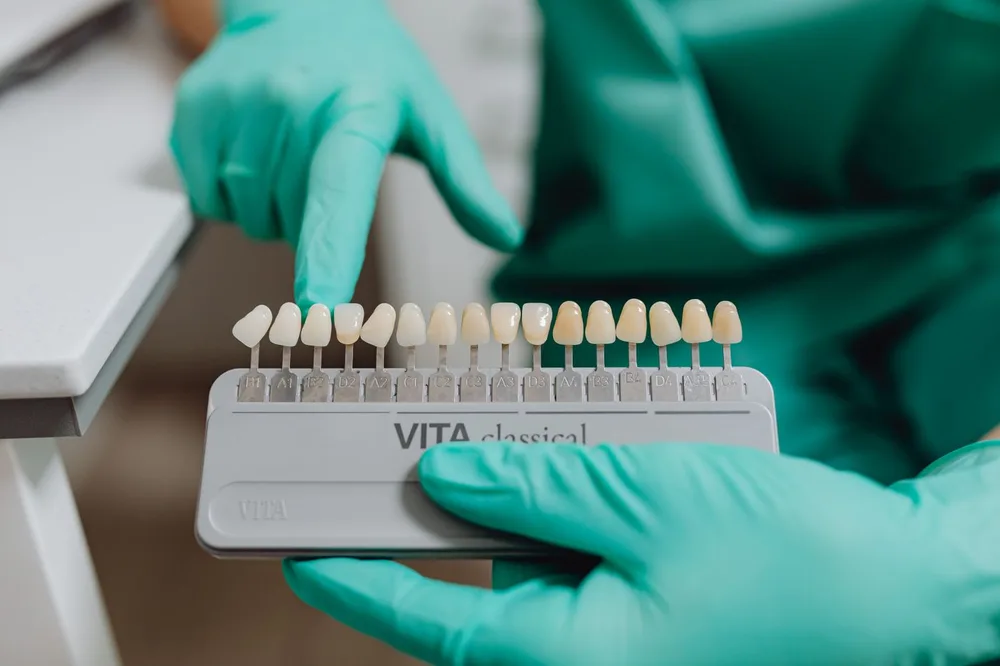
Teeth Whitening
Whitening procedures to lighten tooth colour under a dentist's supervision.
Why Do Teeth Change Colour?
Tea, coffee, smoking and age can gradually darken the colour of teeth. For this kind of external discolouration, professional whitening (bleaching) may be considered as an option; the cause of the discolouration is determined at examination.
In-Office Whitening
In-office whitening is applied under a dentist's supervision, with the gums and soft tissues isolated. The colour change achieved depends on the starting colour of the tooth, the cause of the discolouration and the person's tooth structure. Temporary sensitivity may occur after the procedure.
Maintaining the Colour Afterwards
The effect of whitening may fade over time. Limiting coloured drinks and smoking, regular oral hygiene and check-ups help the colour achieved last longer.
Frequently Asked Questions
Do over-the-counter whitening strips work?
The concentration of active agent in over-the-counter products is lower than that used in the clinic; they may achieve a limited lightening of surface staining. Their real limitations are these: strips sit unevenly on the tooth surface, can overflow at the gum margin, and do not distinguish the cause of the discolouration. Where decay, leakage at a filling margin or discolouration of root canal origin is present, whitening is the wrong solution and causes delay.
How long does teeth whitening last?
The duration cannot be committed to in advance; dietary habits, smoking, oral hygiene and the structure of the tooth are decisive. Frequent consumption of staining drinks such as tea, coffee and red wine shortens it. The shade returns somewhat over time; this is the expected course and does not mean the procedure has failed.
Does whitening affect crowns and fillings?
Whitening is effective only on natural tooth tissue. The colour of restorations such as composite fillings, porcelain crowns and laminates does not change. Sequence therefore matters for patients with restorations in the anterior region: whitening is carried out first, and once the shade has settled the restorations are renewed to match. Otherwise a colour difference appears between the natural teeth and the restorations.
Who should not have whitening?
Where there is untreated decay, a leaking filling, advanced gum recession or active gum inflammation, these must be addressed first. It is not carried out during pregnancy or breastfeeding. Growth and development must be complete; 18 is taken as the starting age. Whitening is not advised for people with vertical cracks in their teeth or widespread gum problems. In patients with marked sensitivity, the cause of that sensitivity is evaluated first. Suitability is determined by clinical examination.
The information on this page is for general information purposes and does not replace a clinical examination. The suitability, duration and alternatives of treatment can only be determined by your dentist after clinical and, where required, radiological evaluation.
This treatment is carried out at the clinic in Yeşilbahçe, Muratpaşa, Antalya. Location and directions.