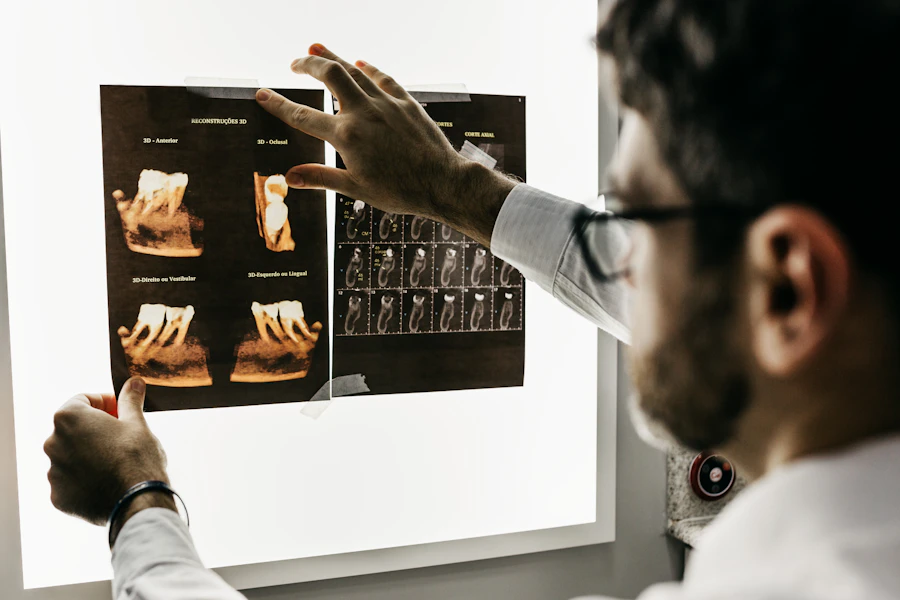
Root Canal Treatment
Modern approaches for root canal procedures.
Why Preserving Your Own Tooth Matters
Where possible, keeping your own tooth is usually the option considered before extracting it and placing an implant. Root canal treatment aims to preserve a tooth at risk of being lost because of deep decay or trauma.
Treatment Comfort
Root canal treatment is performed under local anaesthesia. Modern anaesthetic agents and rotary endodontic instrument systems help shorten the procedure and improve patient comfort. The perception of pain and the healing time vary from person to person.
Restoration After Root Canal and Fibre Posts
Root canal treatment is only the first stage of saving the tooth. A tooth whose nerve and blood supply has been removed loses its nourishment and becomes brittle over time, and structure is also lost during the procedure. When the remaining tooth structure is too little to support the restoration above it, a fibre post placed in the canal space provides support. As the flexibility of a fibre post is close to that of tooth tissue, it transmits forces more evenly. Whether a post is needed is determined by the number of remaining walls and the position of the tooth; not every root-treated tooth requires one.
The Tooth After Treatment
A tooth whose canals have been thoroughly cleaned and filled can continue to function in the mouth with a sound restoration (a filling or a crown) placed on it; how long depends on the condition of the restoration and on regular check-ups.
Frequently Asked Questions
How many appointments does root canal treatment take?
The number of appointments varies with the number of roots, the anatomy of the canals and the state of the inflammation. In some teeth treatment can be completed in a single visit, while more than one is required where inflammation has progressed or the canal system is complex. Between visits the canal space is sealed from the oral environment. A definite number can be given after radiological evaluation and examination of the canals.
Is root canal treatment painful?
The procedure is carried out under local anaesthesia; pain is not expected during treatment. Because root canal treatment is generally applied to a tooth that is already painful, the source of the pain is the condition of the tooth rather than the treatment. Tenderness on biting for a few days afterwards is usual. Steadily increasing pain, swelling or fever is outside the expected course and should be assessed without delay.
Could the tooth simply be extracted instead?
Preserving the natural tooth is in most situations the preferred approach compared with extraction followed by a prosthetic solution, because neighbouring and opposing teeth shift into the space over time and resorption of the jaw bone begins. There are, however, situations in which the tooth cannot be preserved: root fracture, extensive loss of structure, or advanced loss of the supporting tissue around the root. The decision is made by radiological evaluation.
Can a root-treated tooth hurt again?
Once treatment is complete, sensitivity to hot and cold is not expected because the nerve tissue inside the tooth has been removed. The tissues around the tooth remain sensitive, however, and discomfort on biting may occur in the early period. Pain appearing months later may indicate that healing at the root tip is incomplete or that there is a problem with the restoration, and requires assessment.
The information on this page is for general information purposes and does not replace a clinical examination. The suitability, duration and alternatives of treatment can only be determined by your dentist after clinical and, where required, radiological evaluation.
This treatment is carried out at the clinic in Yeşilbahçe, Muratpaşa, Antalya. Location and directions.