Composite Bonding (Composite Veneers)
Reshaping teeth, correcting size and closing gaps with tooth-coloured composite, often without drilling.
What Is Composite Bonding?
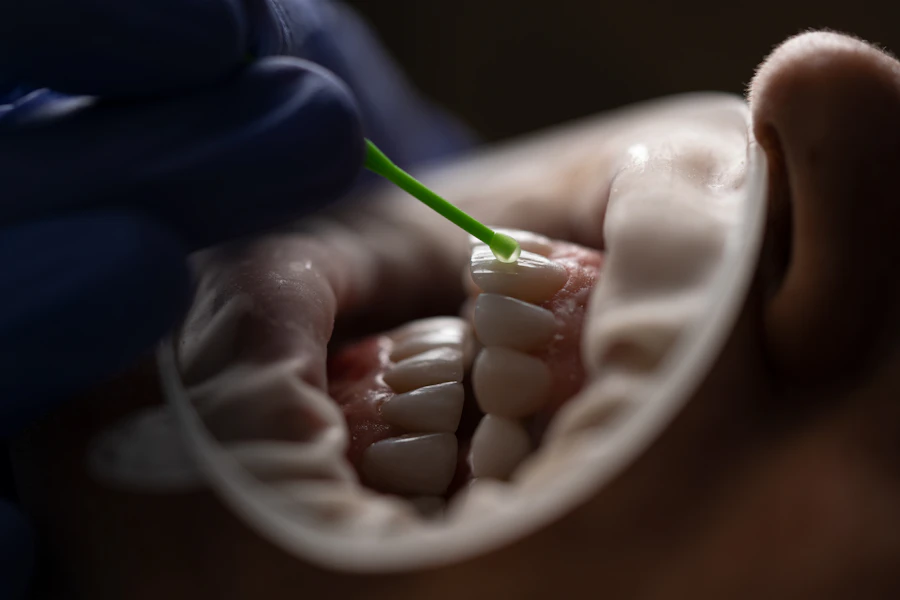
Composite bonding is the direct rebuilding, inside the mouth, of a tooth's shape, length or the gap between teeth by bonding tooth-coloured composite resin to the enamel surface. It is also known as composite veneers, cosmetic bonding or aesthetic filling; all of these describe the same technique: the material is not made in a laboratory but shaped by the dentist in layers directly on the tooth.
Its main difference from porcelain veneers is that it works by adding rather than removing. Porcelain usually requires a certain thickness to be removed from the front surface of the tooth, whereas bonding, in suitable cases, is done without touching the tooth at all or with only light roughening of the surface.
When Is It Chosen?
Gaps between the front teeth (diastema), teeth that are small or cone-shaped from birth, teeth chipped at the edge or shortened by wear, lateral teeth that differ from each other in size or shape, the visual irregularity created by mild crowding, surface spots and lines, and limited colour differences that do not respond to whitening are the main situations in which bonding is considered.
Closing gaps between teeth and enlarging small teeth are the two areas where this technique is used most often, so they are explained in detail on separate pages; you can find the links at the bottom of this page.
Repairing a Broken Tooth with Composite
Pieces broken off the edge of a front tooth, chipped corners and enamel-dentine fractures that do not reach the nerve are often repaired with composite directly in the mouth in a single visit. Because the composite is bonded to the broken surface, sound tissue is usually left untouched; the shade and layering are built to match the neighbouring teeth. If the broken piece has been found, bringing it kept in milk or saline is advised; in suitable cases it can be reattached. If the fracture reaches the nerve, a procedure to protect the nerve or root canal treatment is needed first, and composite is not suitable for root fractures. The depth of the fracture is therefore assessed with an examination and X-ray before the repair. Details are explained in the article Can a Broken Tooth Be Repaired with Composite?
Bonding at Our Clinic
Dt. Engin Deniz has been performing composite bonding for about 20 years, and it is among the aesthetic treatments carried out most often at the clinic. Closing gaps between teeth, enlarging cone-shaped and small teeth, and restoring chipped or worn edges make up most of this work.
For front teeth, nano-hybrid composite systems developed for anterior aesthetic restorations are used, including Enamel Plus (Micerium) and the Kuraray Clearfil Majesty Esthetic series. A multi-layer technique is used: each layer, such as dentine, enamel and incisal edge, gets its own composite shade and opacity, and where needed effect shades are added to imitate natural details such as translucency at the edge or white spots. The aim is for the tooth to transmit and reflect light in a way close to a natural tooth.
In the final stage the surface is refined and polished step by step with a multi-stage polishing system. A high surface gloss brings the appearance closer to a natural tooth and, because a smooth surface resists staining and plaque better, also makes care easier.
Before Treatment: Planning
The result of bonding depends largely on planning. At the examination the health of the teeth and gums, the bite, signs of clenching or grinding and the expected change are assessed together. The smile line, the proportions of the teeth to each other and the facial midline are reviewed with photographs.
Where the change is substantial, trying the planned form in the mouth with a temporary material (mock-up) allows the plan to be seen together with the patient. If the teeth are to be whitened, whitening is done before bonding; since composite is not affected by whitening gels, the shade must be chosen according to the final colour of the teeth.
The Procedure Step by Step
The shade is selected at the start of the session, before the teeth dry out; dehydrated enamel temporarily looks lighter. The working area is isolated from saliva and moisture, because the quality of adhesion depends largely on a dry surface. The enamel surface is prepared with acid and a bonding agent is applied.
Composite is placed in layers that imitate the natural structure of the tooth: a more opaque inner layer stands in for dentine, more translucent outer layers for enamel. Each layer is light-cured. In the final stage shape and surface texture are given, margins are finished and the surface is polished; contacts in biting and side-to-side movements are then checked. For a few teeth the procedure is usually completed in a single session.
Is Tooth Structure Removed?
In suitable cases, no. In procedures that require adding, such as closing gaps or enlarging teeth, composite is bonded directly to sound enamel, and anaesthesia is usually not needed. Limited shaping may be required when replacing old, stained fillings, correcting a part of the tooth that stands forward, or when a thicker layer is needed to mask a dark colour difference.
Preserving tooth structure also has a practical consequence: if porcelain veneers or another treatment are planned in the future, enamel that has not been removed keeps those options open.
Composite Bonding or Porcelain Veneers?
The two are not rivals but answers to different needs. Bonding is completed in one session, usually requires no drilling, can be repaired in the mouth if it chips and allows a later move to another treatment. On the other hand, a composite surface does not stay glossy for as long as ceramic, may pick up stain over time and needs periodic polishing.
Porcelain veneers are made in a laboratory; they keep their surface gloss and colour for a long time and are preferred for more extensive changes in colour and shape. In most cases, however, they require removal of tooth structure and more than one session. The choice is made together at the examination according to the size of the desired change, the current condition of the teeth, the bite and the person's expectations.
How Long Does It Last?
How long a restoration will remain in the mouth cannot be committed to in advance. The main factors for composite bonding are the forces on the teeth (clenching, grinding, biting hard food with the front teeth), the thickness and position of the composite, oral hygiene, and the use of staining drinks and tobacco.
The problems commonly seen with bonding are not a sudden, large loss but small chips at the edge and loss of surface gloss. Most of these can be resolved at check-up visits by repair and polishing, without removing the restoration. For people with signs of clenching, wearing a night guard also protects the composite.
Aftercare
In the first 48 hours the composite surface is more prone to staining, so strongly coloured drinks such as tea, coffee, cola and red wine should be reduced. As a lasting habit, cracking nuts with the front teeth, nail biting, chewing pens and crunching ice should be avoided.
Brushing and flossing continue as usual; keeping the junction between composite and tooth clean matters for both gum health and margin staining. At regular check-ups the surface can be re-polished and small areas of wear can be topped up.
Who Is It Not Suitable For?
In cases with marked crowding or a jaw relationship problem, bonding changes only the appearance, not the problem itself; orthodontic assessment is needed first. Severe clenching and grinding, teeth with extensive loss of structure or weakened by root canal treatment, active decay and untreated gum disease also change the plan.
Some of these can be addressed first and bonding carried out afterwards; in others a crown, porcelain veneers or orthodontics is the more suitable option. The decision is made at the clinical examination.
Frequently Asked Questions
How many appointments does composite bonding take?
The application is usually completed in a single visit; because the composite material is shaped and cured directly on the tooth, there is no laboratory stage. The duration varies with the number of teeth involved and the extent of the work. If whitening is planned beforehand so that the shade can be matched, bonding is left until after the whitening.
Can bonding replace a laminate?
The two answer different situations. Bonding can be applied for limited irregularities of shape, small fractures, gaps between teeth and colour variations with almost no removal of tooth tissue. A laminate, being a thin ceramic layer, is more resistant to surface wear and staining but requires a thin preparation of the front surface. The choice is made according to the size of the area involved and the patient's habits.
Does composite stain over time?
Composite material has a more porous surface than ceramic; staining can appear over time with tea, coffee, red wine and smoking. In most cases this staining can be reduced by surface polishing. How quickly it appears varies between individuals according to dietary habits and oral hygiene.
What should I be careful about after bonding?
Biting hard foods with the front teeth should be avoided; cracking nuts, nail biting, chewing pens and crunching ice are the main habits that cause composite to fracture. Keeping away from dark-coloured drinks on the first day is advised while the surface settles. If a clenching habit is present it is assessed separately, as the restoration may fracture again if that is not controlled.
Are composite veneers and composite bonding the same thing?
They largely describe the same procedure. The term composite veneer is usually used when the whole front surface of the tooth is covered with composite, while bonding is used more broadly for any procedure in which composite is bonded to the tooth and shaped. In both, the material is shaped directly in the mouth and there is no laboratory stage.
Does bonding hurt, and is numbing needed?
When no tooth structure is removed, the work takes place on enamel, so pain is usually not felt and anaesthesia is not needed. Local anaesthesia may be used when old fillings are replaced, when the tooth needs shaping, or when the tooth is sensitive. There is no real recovery period afterwards; people return to their daily routine the same day.
Should whitening be done first?
If the teeth are to be made lighter, yes. Composite is not affected by whitening gels; if bonding is done first, a colour difference appears between the composite and the natural teeth that are lightened later. After whitening, one to two weeks are usually allowed before bonding so that the colour settles and adhesion is not compromised.
How many years does composite bonding last?
No definite period can be given; it depends largely on the forces on the teeth, the thickness of the composite, oral hygiene and staining habits. The problems commonly seen with bonding are small chips at the edge and loss of surface gloss; most of these can be resolved at check-ups by repair and polishing without replacing the restoration. If there is clenching, a night guard also protects the composite.
What happens if the composite chips?
An important advantage of composite is that it can be repaired in the mouth. A small chip at the edge can be built up with the same material without replacing the whole restoration. If chipping keeps recurring, the cause is investigated; clenching, an early contact in the bite or the habit of biting hard food with the front teeth are the most common reasons.
Can bonding be done on a single tooth?
Yes. When restoring a chipped edge or bringing a single small tooth into harmony with its neighbour, only that tooth is treated. The challenge is matching the single tooth to the surrounding natural teeth in colour and surface texture, so shade selection and layering need care.
Can porcelain veneers be done after bonding?
Bonding that preserves tooth structure does not prevent a later move to porcelain veneers or another restoration. The composite can be removed when needed and the tooth beneath prepared according to the new plan. For some people bonding therefore remains their preferred solution for a long time, while for others it is an intermediate step that lets them see the result before more extensive treatment.
The information on this page is for general information purposes and does not replace a clinical examination. The suitability, duration and alternatives of treatment can only be determined by your dentist after clinical and, where required, radiological evaluation.
This treatment is carried out at the clinic in Yeşilbahçe, Muratpaşa, Antalya. Location and directions.