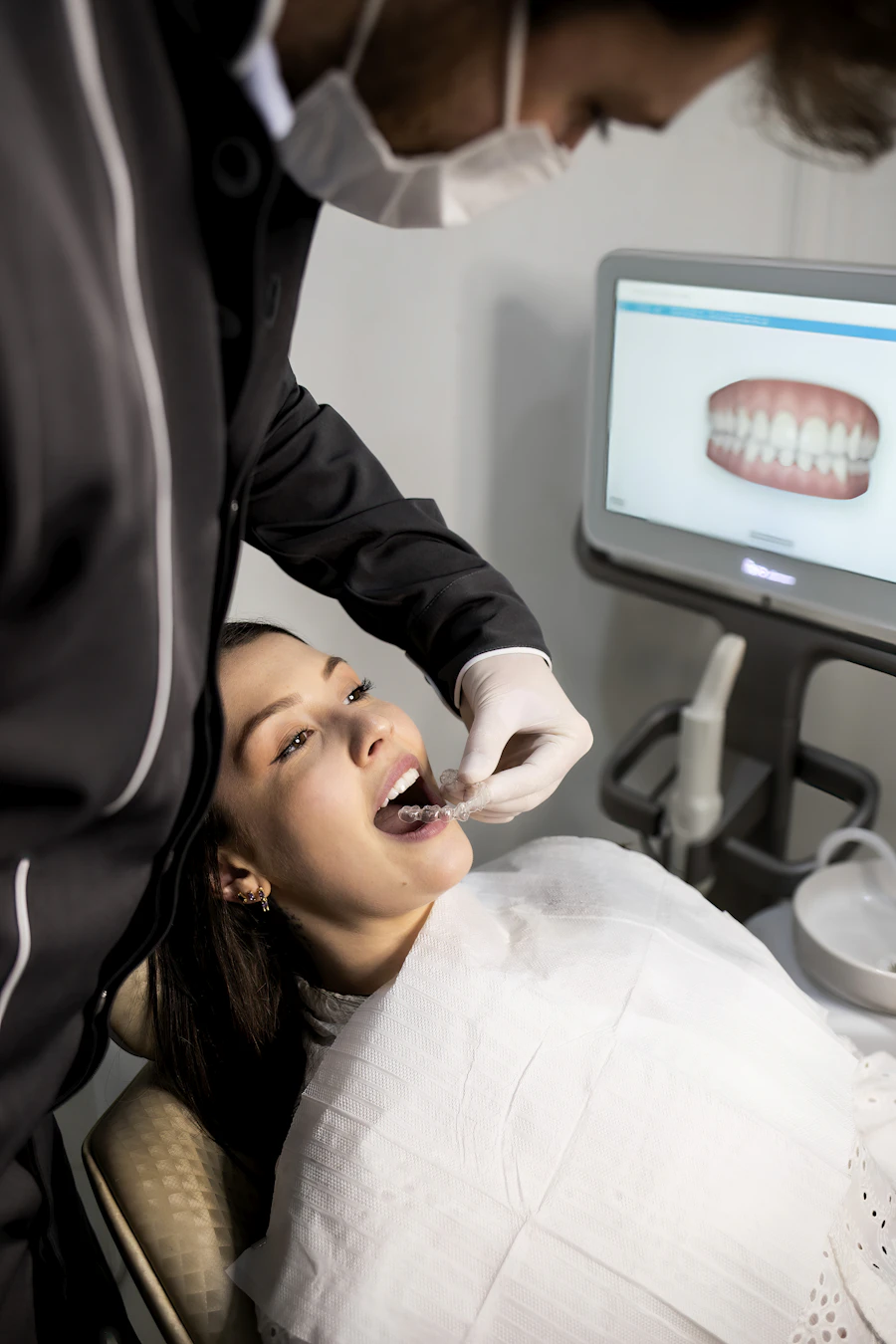
Closing Gaps Between Teeth (Diastema)
Closing gaps between the front teeth with composite bonding.
What Is a Diastema?
A diastema is a noticeable gap between two teeth. It is seen most often between the two upper front teeth, but it can also occur between the side teeth or at several points. In everyday language it is simply called a gap in the teeth.
For some people it is purely a matter of appearance; for others it comes with complaints such as air escaping while speaking, food collecting, or the gap widening over time.
Why Does It Occur?
The most common cause is a mismatch between the size of the teeth and the length of the dental arch: when the teeth are small for the arch, gaps form between them. Lateral teeth that are small or cone-shaped from birth, a missing tooth, an upper lip frenum extending between the teeth and a tongue-thrust habit are among the other causes.
A gap that appears or widens in adulthood deserves particular attention. With bone loss due to gum disease, the teeth can fan forward and drift apart. In that case gum treatment is needed first; closing the gap does not remove the cause.
What Are the Options?
There is no single way to close a diastema. Composite bonding closes the gap by adding composite to the side surfaces of the neighbouring teeth, and for small to moderate gaps it is usually done without drilling. Orthodontic treatment (braces or clear aligners) closes the gap by moving the teeth themselves; it comes to the fore when there are several gaps or when the position of the teeth also needs correcting. Porcelain veneers are considered when gap closure needs to be combined with changes in shape and colour.
In some cases the most balanced result comes from a combined plan: orthodontics distributes the spaces evenly between the teeth and bonding completes the remainder.
How Is a Gap Closed with Bonding?
The basic principle is not to load the whole gap onto one tooth. The space is usually shared between the two neighbouring teeth, so that both keep their natural proportions and neither looks noticeably wider than the other. Where the gap is large enough to upset the width-to-length ratio, the tooth may also be lengthened slightly or orthodontic preparation may be recommended.
Composite is added so as to give a natural contour from the side of the tooth down to the gum line. Shaping this transition correctly helps the gum papilla fill the space and reduces the dark triangle that can appear between teeth. The procedure is usually completed in a single session.
The Lip Frenum and Diastema
If the upper lip frenum extends between the teeth with a thick attachment, it can contribute to a closed gap opening again. In that case releasing the frenum (frenectomy) is considered as part of the plan; at our clinic this can be done with a diode laser.
In children, a gap between the front teeth can be normal during the primary and mixed dentition stages and may close on its own; there is no hurry to close it in this age group.
Aftercare
Where the gap was there is now a contact point, and cleaning it with floss or an interdental brush should become a habit. If plaque builds up at the composite margins, the gum can become inflamed and the margin can stain.
Avoiding biting hard food with the front teeth and attending regular check-ups are the general rules of bonding care. Where gaps were closed after orthodontic treatment, wearing a retainer so that the teeth stay in place is also important.
When Is Bonding Not Enough?
If the gap is very wide, the composite needed to close it makes the teeth look disproportionately wide; orthodontics or a combined plan then gives a more appropriate result. Widespread spacing across several teeth, a deep bite and a tongue-thrust habit also affect the outcome. Teeth drifting apart because of gum disease require gum treatment first.
Suitability is determined at the examination by assessing the size of the gap, the proportions of the teeth and the bite.
Frequently Asked Questions
Is closing a gap between teeth done in one session?
For small to moderate gaps closed with bonding, the procedure is usually completed in one session. If there are several gaps, if whitening is planned first, or if a preliminary procedure on the lip frenum or gums is needed, treatment may be spread over several stages. In cases requiring orthodontics, the time is measured in months.
Are the teeth drilled when closing a gap?
When closing a gap with bonding, composite is added to the side surface of the tooth; in most cases no tooth structure is removed and anaesthesia is not needed. When closing with porcelain veneers, a limited thickness is usually removed from the front surface of the tooth. Which method is suitable depends on the size of the gap and the condition of the teeth.
Can a closed gap open again?
In a gap closed with bonding the teeth do not move, so the gap does not reopen by itself; however, if the composite chips or detaches it needs repair. If the cause of the gap is tongue thrust, gum disease or a thick lip frenum, the position of the teeth may continue to change unless the cause is addressed. Where gaps are closed with orthodontics and no retainer is worn, the teeth may tend to return to their original position.
Should orthodontics or bonding be chosen for a diastema?
If there is a single gap and the size of the teeth allows it to be closed, bonding is a quick and conservative option. If there are several gaps, the teeth are out of position or angled, or there is a bite problem, orthodontics is a more appropriate starting point; any small spaces remaining afterwards can be completed with bonding. The decision is made by assessing the width-to-length ratio of the teeth and the bite.
Should a gap between a child's front teeth be closed?
During the primary and mixed dentition stages, a gap between the front teeth is often normal and may close on its own as the lateral teeth and canines erupt. Closing it with bonding is generally not recommended at this stage. If the gap persists after the permanent teeth are complete, the cause is assessed before deciding.
Does speech change after a gap is closed?
Air escaping through a gap between the front teeth can affect the pronunciation of some sounds; once the gap is closed there may be a short adjustment period in the first days while the tongue gets used to the new surface. This usually settles by itself within a few days. If a lasting difference is felt, the shape of the back surface of the composite is assessed at a check-up.
The information on this page is for general information purposes and does not replace a clinical examination. The suitability, duration and alternatives of treatment can only be determined by your dentist after clinical and, where required, radiological evaluation.
This treatment is carried out at the clinic in Yeşilbahçe, Muratpaşa, Antalya. Location and directions.