Bruxism Treatments
Bruxism diagnosis, night guards, and botox applications.
Unnoticed Damage to Teeth
Unconscious teeth grinding (Bruxism) during sleep or under stress can cause severe wear and fractures on your enamel. Most become aware of it due to unexplained jaw fatigue or headaches upon waking.
Custom Protective Night Guards
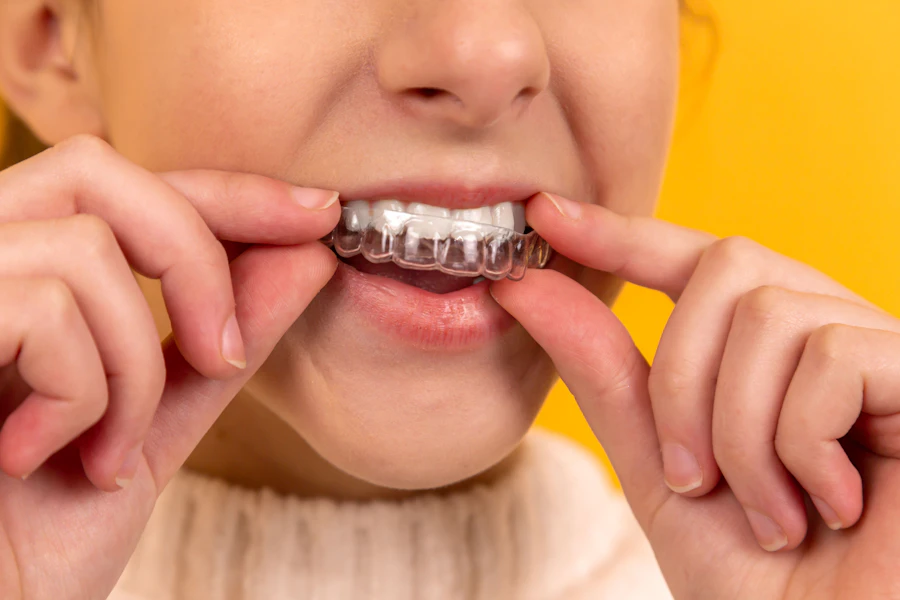
In the first step of treatment, an impression of your teeth is taken and clear protective guards (night guards) that fit only your teeth are prepared. These guards prevent direct contact between the teeth and protect the enamel from wear.
Muscle Relaxing Treatments
In advanced cases of grinding, a night guard alone may not be enough. Masseter applications to the chewing muscles aim to reduce the muscle activity that makes the jaw apply excessive force.
Frequently Asked Questions
What happens if grinding is not treated?
Where the process is not controlled, wear on the teeth progresses, enamel cracks may form and repeated fractures may be seen in restorations. Excessive load can set the stage for gum recession and loss of tooth substance at the neck of the tooth. As the load on the jaw muscles and joint increases, morning headache, muscle fatigue and clicking or pain in the joint may be added to the picture. Which findings predominate varies between individuals.
How is a night guard made and cared for?
The guard is made individually from an impression; ready-made trays sold over the counter do not match the bite and can increase the load on the joint. The bite is checked at fitting and balanced by adjustment where needed. For care, the guard is cleaned each morning after removal with cold water and a brush; hot water causes it to deform. Because the bite can change over time, review appointments are advised.
Does grinding cause jaw joint problems?
Pain, clicking or restricted opening at the jaw joint can occur alongside grinding; not every joint complaint is caused by it, however. Joint disorders can arise from different causes and require separate assessment. The plan is therefore not limited to protecting the teeth; muscle and joint findings are also addressed at examination.
Does grinding stop on its own once stress passes?
Stress is a frequently cited factor but not the only one; irregular breathing during sleep, certain medications, caffeine and alcohol consumption and discrepancies in the bite may also play a part. Severity may therefore ease as stress decreases, but it cannot be said that the habit will disappear entirely. Protection of the teeth is planned independently of this.
The information on this page is for general information purposes and does not replace a clinical examination. The suitability, duration and alternatives of treatment can only be determined by your dentist after clinical and, where required, radiological evaluation.
This treatment is carried out at the clinic in Yeşilbahçe, Muratpaşa, Antalya. Location and directions.