Inlay and Onlay Restorations
Laboratory-made restorations that sit between a filling and a crown.
The Difference Between an Inlay and an Onlay
An inlay sits within the space between the cusps on the chewing surface and does not cover the cusps. An onlay extends to include one or more cusps when the loss of structure reaches them. Neither surrounds the whole tooth, which is what distinguishes them from crown treatment.
When Does It Come Into Question?
Replacement of large old fillings, wide cavities caused by decay that has advanced beneath a filling, fractured cusps, and teeth with structure loss after root canal treatment that do not require full coverage are the principal situations. The aim is to preserve as much sound tooth structure as possible.
How It Differs From a Direct Filling
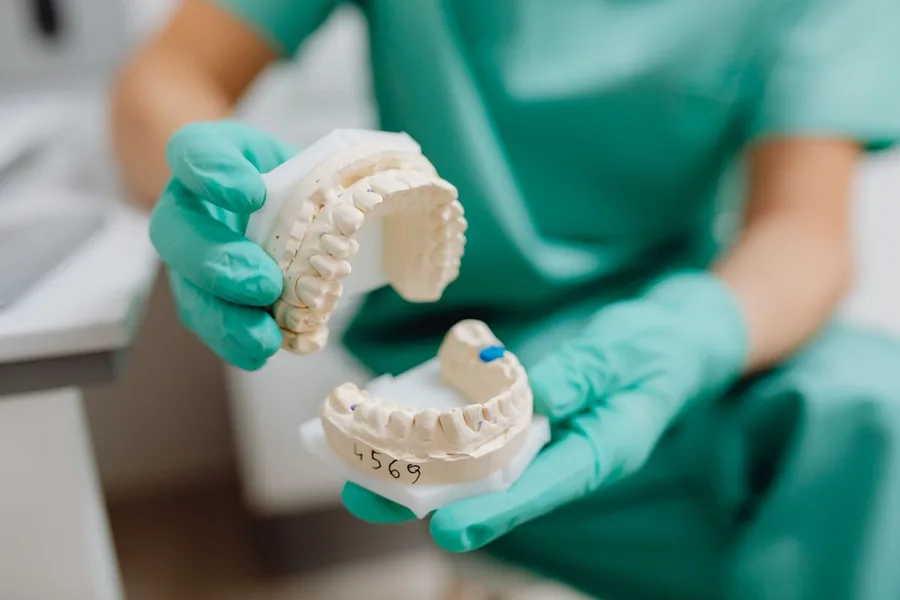
Composite fillings placed layer by layer in the mouth are limited in wide cavities in terms of shrinkage and establishing contact points. Because inlays and onlays are shaped outside the mouth on a model, contact with neighbouring teeth and the anatomy of the chewing surface can be created in a more controlled way.
The Treatment Process
In the first session decay and the old restoration are removed, the tooth is prepared appropriately and an impression is taken. A temporary restoration is used in the interim. The piece produced in the laboratory is fitted and bonded in the second session. The material may be ceramic or composite based; the choice is made according to the position of the tooth and the occlusion.
Care Afterwards
How long the restoration remains in the mouth depends on oral hygiene, gum health and chewing habits. A protective guard may be considered in people with a clenching habit. Interdental cleaning and regular check-ups help preserve marginal integrity.
Frequently Asked Questions
What is the difference between an inlay and an onlay?
Both are restorations prepared in the laboratory and bonded to the tooth; the difference is in the area they cover. An inlay sits within the hollow between the cusps of the tooth. An onlay covers one or more cusps in addition to that area. Which is suitable is determined by whether the tissue lost to decay or fracture extends to the cusps.
Why an inlay or onlay rather than a filling?
Once the loss of structure exceeds a certain width, shrinkage and marginal adaptation of a filling placed in layers in the mouth begin to present problems. Because inlays and onlays are produced outside the mouth on a model, the margin and the contact point can be formed under better control. This approach also removes less sound tissue than a crown.
Is an inlay/onlay or a crown needed?
The determining factor is whether the remaining cusps are thick enough to withstand chewing forces. If the cusps are sound, an inlay or onlay can provide a solution while removing less tissue. Where the cusps have thinned, a crack is present, or the tooth has had root canal treatment, full coverage comes into question. The distinction is made by clinical examination and, where required, radiological evaluation.
What material are inlays and onlays made from?
Glass ceramic or laboratory-processed composite is generally used. Ceramic transmits light in a way closer to natural tooth and is more resistant to surface wear; composite is more readily repairable and causes less wear to the opposing tooth. The choice is made according to the position of the tooth, the force it carries and the bite relationship.
The information on this page is for general information purposes and does not replace a clinical examination. The suitability, duration and alternatives of treatment can only be determined by your dentist after clinical and, where required, radiological evaluation.
This treatment is carried out at the clinic in Yeşilbahçe, Muratpaşa, Antalya. Location and directions.