Jaw Joint (TMJ) Pain: Causes, Symptoms and Treatment
Symptoms of jaw joint pain, muscle and disc-related causes, how it differs from tooth and ear pain, first steps at home, treatment approaches including night guards, and urgent signs.
What Causes Jaw Joint Pain?
Jaw joint pain most often comes from overloading of the chewing muscles (clenching, grinding, stress), and less often from displacement of the disc inside the joint or from inflammation and wear in the joint itself. Pain in front of the ear, a clicking sound when opening the mouth and being unable to open the mouth fully are the most common symptoms. Most complaints ease with conservative measures such as a soft diet, changing habits, exercises and, where needed, a night guard; surgery is rarely required.
What Is the Jaw Joint?
The jaw joint (temporomandibular joint, TMJ) is the pair of joints, one on each side just in front of the ears, where the lower jaw connects to the skull. It works constantly when speaking, chewing, swallowing and yawning. Inside the joint is a small cartilage disc that moves between the bone surfaces. Problems involving the joint and the chewing muscles that move it are known medically as temporomandibular disorders (TMD).
Symptoms of Jaw Joint Pain
- Pain in front of the ear, at the angle of the jaw or in the temple
- Pain that increases when chewing, talking or opening the mouth wide
- Clicking, popping or grating sounds when opening and closing the mouth
- Being unable to open the mouth fully, or the jaw shifting to one side when opening
- Brief locking of the jaw (getting stuck open or closed)
- Tiredness and tension in the jaw muscles in the morning
- Headache in the temples, a feeling of fullness in the ear
A painless click on its own is very common and often needs no treatment. If the sound comes with pain, limited mouth opening or locking, an assessment is advised.
Causes of Jaw Joint Pain
Muscle-related pain
This is the most common cause. Clenching and grinding during the day or in sleep (bruxism), stress, and habits such as chewing gum for long periods or biting nails or pens tire the chewing muscles. Tension, tenderness and spreading pain develop in the muscles. The signs of clenching are described in detail in the article on clenching and bruxism.
Disc-related problems
The disc inside the joint can slip forward from its normal position. In that case a clicking sound is heard as the disc returns to place when the mouth opens. If the disc does not return to place, mouth opening may be limited.
Causes in the joint itself
Inflammation of the joint (arthritis), age-related changes (osteoarthritis), rheumatic diseases and blows to the jaw can also cause pain.
Contributing factors
Sleep problems, anxiety and stress, neck and shoulder tension and, in some cases, changes in the bite (such as a new filling or crown that is too high) can make complaints worse. Usually it is not a single cause but a combination of several factors.
Jaw Joint Pain, Toothache or Earache?
Because jaw joint pain can radiate to the ear or the teeth, it can be confused with them. If the pain increases with chewing and jaw movement and there is tenderness when pressing in front of the ear, a joint or muscle origin is more likely. Lingering pain to hot and cold in a single tooth, marked pain on biting or swelling suggest a problem originating in a tooth. If there is ear discharge, hearing loss or fever, an ear, nose and throat assessment is needed. A definite distinction is made by examination.
First Steps at Home
- Eat soft foods for a few days, avoiding large bites and hard foods
- Do not chew gum; stop habits such as biting nails, pens or lips
- Avoid opening the jaw too wide when yawning or opening the mouth; support the jaw with your hand if needed
- Apply warmth or cold to the painful area for 10–15 minutes several times a day
- Notice during the day whether your teeth are touching: at rest, the lips should be closed, the teeth slightly apart and the tongue on the palate
- Avoid holding the phone between your shoulder and ear, and do not sit for long periods resting your chin on your hand
If a painkiller is needed, consult a doctor or pharmacist, taking other medication and your health into account.
Examination and Diagnosis
The assessment covers when and how the complaints began; the jaw muscles and joint area are examined by hand, mouth opening is measured and joint sounds are listened to. Signs of clenching such as wear, chips or cracks in the teeth, and the bite, are checked. The possibility of pain coming from a tooth is ruled out with an X-ray. Where considered necessary, further tests such as magnetic resonance imaging (MRI) may be requested for detailed imaging of the joint.
Treatment Approaches
Most jaw joint pain is managed with non-surgical, conservative methods, often several used together:
- Information and habit changes: Recognising and reducing triggering habits
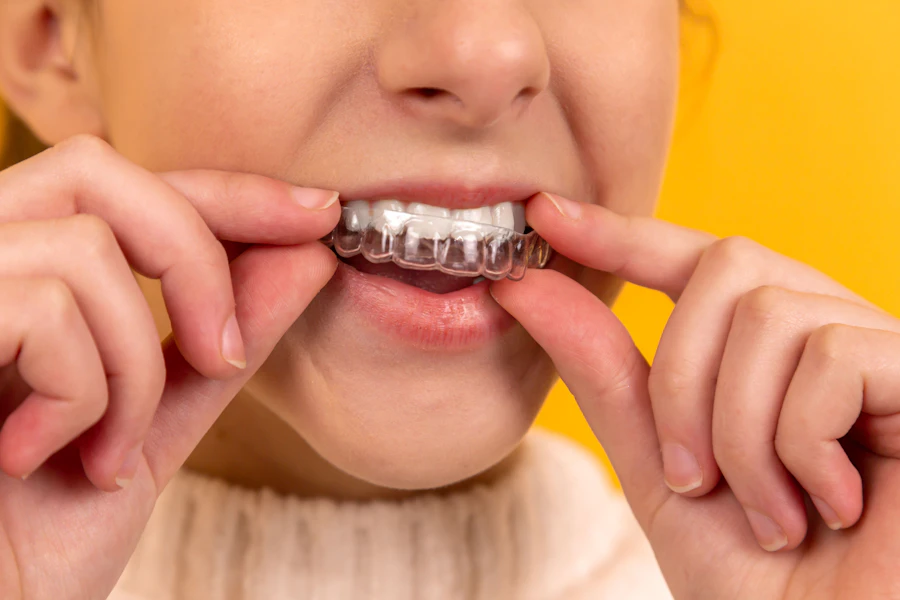
- Night guard (occlusal splint): A custom-made hard acrylic splint can help reduce the load of night-time clenching and grinding on the teeth and the joint. Details are on the teeth clenching treatment page.
- Exercises and physiotherapy: Stretching and relaxation exercises for the jaw and neck muscles
- Medication: Prescribed by the doctor for a short period when considered necessary
- Stress and sleep management: Together with doctors in the relevant fields where needed
In the small number of cases that do not respond to conservative methods and involve advanced joint problems, referral is made to doctors working in jaw surgery. Permanent, irreversible procedures (such as extensive grinding down of the teeth) are not recommended as a first treatment option.
When Should You Seek Care Without Delay?
- The jaw locking, or the mouth being unable to open or close
- Pain or a change in the bite that starts after a blow to the jaw
- Swelling, redness and fever in the joint area
- Numbness or weakness in the face, or steadily worsening pain
- Complaints that have not gone away for several weeks or make eating difficult
This article is for general information and does not replace an examination by a dentist. The cause of jaw joint complaints and the appropriate treatment approach are decided after a clinical examination and any tests considered necessary.
Frequently Asked Questions
Does jaw joint pain go away on its own?
A large share of muscle-related jaw pain eases within a few weeks with measures such as a soft diet, stopping triggering habits and applying warmth or cold. If the pain lasts more than a few weeks, mouth opening becomes limited or the jaw locks, an assessment is needed.
Is a clicking jaw joint dangerous?
A painless click on its own is very common and often needs no treatment. If the click comes with pain, limited mouth opening or the jaw catching, an examination is advised.
Which doctor should I see for jaw joint pain?
The first assessment can be done by a dentist: tooth-related pain is ruled out, signs of clenching and the bite are examined and, if needed, a night guard is made. For advanced joint problems, referral is made to doctors working in jaw surgery, and to an ear, nose and throat doctor if an ear cause is suspected.