How to Recognise the Signs of Teeth Grinding (Bruxism)
Teeth grinding often occurs during sleep and goes unnoticed. Signs of bruxism from morning jaw fatigue to tooth wear, and how it is assessed.
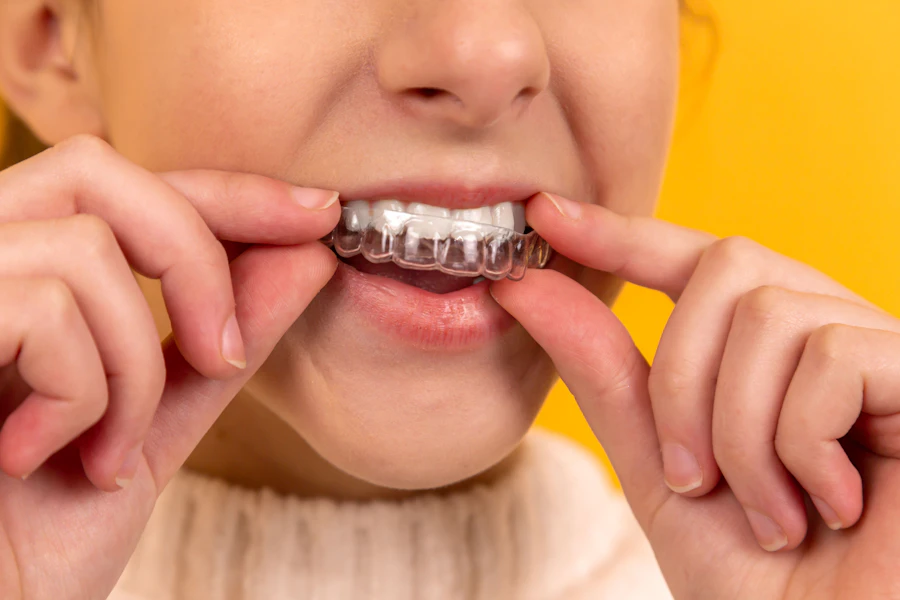
What Is Bruxism?
Bruxism is the non-functional clenching of the teeth against each other or sliding them over one another. In its awake form the person can usually notice the clenching; in the sleep-related form there is often no awareness. The condition is therefore frequently identified through examination findings rather than through the patient's complaint.
Signs felt in the morning
The most typical finding in people who grind during sleep is a sense of fatigue or tightness in the jaw muscles on waking. Headache starting in the temple region, discomfort in front of the ear and difficulty opening the mouth are also reported. If these complaints decrease as the day progresses, a night-time load comes to mind.
Traces seen on the teeth
- Wear facets: Flattening of incisal edges and cusps, shortening of the teeth
- Enamel cracks: Fine, hairline lines particularly on the front teeth
- Notching at the neck of the tooth: Wedge-shaped loss of structure at the gum margin
- Fractured restorations: Fillings or crowns fracturing more often than expected
- Sensitivity: Cold sensitivity related to enamel thinning
Signs in the soft tissue
A whitish line may form on the inner surface of the cheek along the line where the teeth meet. Indentations resembling tooth imprints may be seen along the edges of the tongue. Prominence of the jaw muscles, particularly the masseter, may also be a finding of prolonged loading.
Factors that may accompany bruxism
Stress and anxiety levels, sleep irregularities, certain medications, caffeine and tobacco use, and occlusal discrepancies are among the factors associated with bruxism. It is usually not possible to attribute it to a single cause; several factors are typically present together.
How is it assessed?
Clinical examination looks at the wear pattern, the occlusal relationship, tenderness of the jaw muscles and joint movements. Radiological evaluation is carried out where necessary. Following assessment, options such as a night guard, occlusal adjustments or restoration of worn teeth may be considered.
Why should it not be postponed?
The loss of tooth structure that occurs in bruxism is irreversible. A protective approach in the early period may reduce the need for more extensive restoration later. Joint complaints can also be addressed before they become persistent.
When Should You Seek Care Without Delay?
- The jaw locking, or the mouth being unable to open or close fully
- A new fracture in a tooth or filling, or sharp pain on biting
- Marked looseness of the teeth
- Pain in the jaw, in front of the ear or in the temple lasting more than a few weeks or steadily increasing
- Snoring and pauses in breathing during sleep being noticed (a doctor's assessment for sleep-related breathing problems may be needed)
Jaw joint complaints are covered in the article on jaw joint pain, and night guards and treatment options on the teeth clenching treatment page.
This article is for general information purposes and does not replace a clinical examination. Whether the symptoms are related to bruxism is determined by clinical examination.
Frequently Asked Questions
How do I know if I grind my teeth?
Because grinding mostly occurs during sleep, the person is usually unaware of it, and the diagnosis is made from indirect findings. Tiredness in the jaw muscles or a feeling of pressure at the temples on waking, increasing cold sensitivity, flattening of the incisal edges of the front teeth, a line-shaped mark inside the cheek and tooth indentations along the edge of the tongue are common signs. A definitive assessment is made by clinical examination of the wear facets and the bite relationship.
What are the symptoms of bruxism?
The symptoms are not limited to the teeth. Wear and enamel cracks, repeated fracture of restorations, clicking or pain in the jaw joint, restricted mouth opening, morning headache and pain radiating around the ear may all occur. Which symptom predominates varies between individuals; in some patients the only finding is that restorations fracture frequently.
What causes teeth grinding?
Grinding does not have a single cause. Stress and anxiety are frequently cited; alongside these, irregular breathing during sleep, certain medications, caffeine and alcohol consumption, and discrepancies in the bite relationship may play a part. For this reason the approach is not limited to protecting the teeth; evaluating the underlying factor is also part of the plan.
Does a night guard stop grinding?
A night guard does not remove the grinding habit; it aims to reduce wear and fracture by placing a protective layer between the teeth. In other words it manages the consequence rather than the behaviour. It is important that the guard is made individually and that the bite is checked; an unsuitable guard can increase the load on the jaw joint. The type and duration of use are determined after clinical examination.