Does Teeth Whitening Damage Your Teeth?
How whitening affects enamel, temporary sensitivity and gum irritation, colour mismatch with fillings and crowns, situations that increase the risk of harm and who it is not advised for.
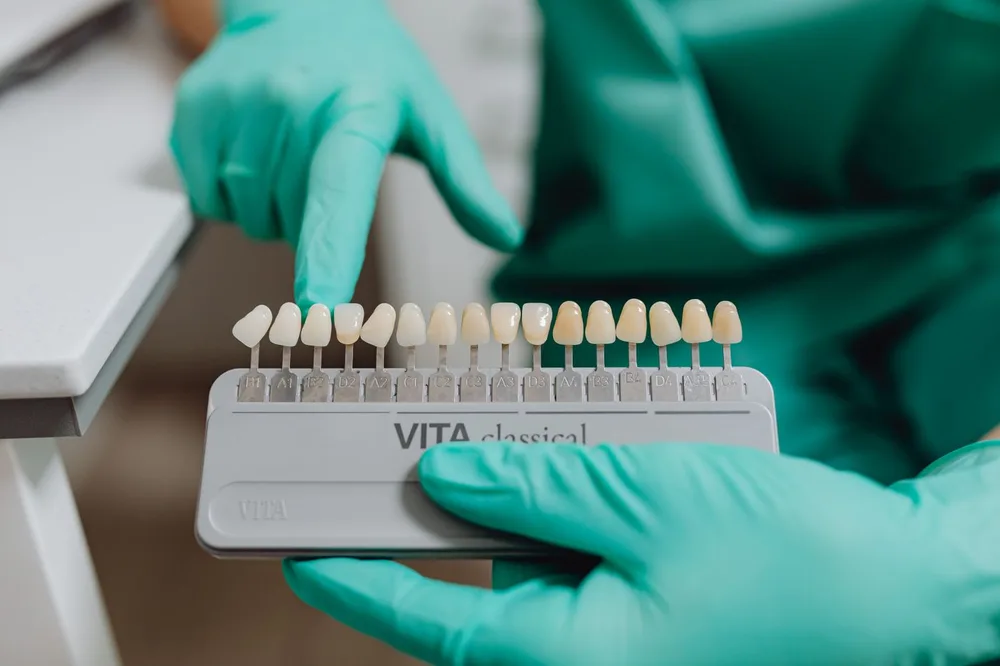
Does Teeth Whitening Damage Your Teeth?
Many studies show that teeth whitening carried out after a dentist's assessment, with an appropriate method and concentration, does not cause permanent structural damage to tooth enamel. The most common side effects are temporary tooth sensitivity and temporary gum irritation. The risk of harm arises mainly with uncontrolled use, the wrong choice of product, or whitening while an untreated problem is present.
How Does Whitening Work?
Whitening gels contain hydrogen peroxide or carbamide peroxide. These substances pass through the enamel, break down the coloured molecules in the tooth tissue and make them lighter. In other words, whitening works by changing the colour within the tissue, not by wearing away the enamel or removing a layer from the surface. That is why, when done correctly, it does not reduce enamel thickness.
Possible Side Effects
Temporary tooth sensitivity
Sensitivity to cold or short, sharp twinges may occur during whitening and for a few days afterwards. This is usually temporary and eases once treatment ends. To reduce sensitivity, sessions can be spaced further apart, gel contact time shortened, or desensitising pastes and gels used. In people who already have sensitivity, its cause should be assessed before whitening; details are in the article what causes tooth sensitivity.
Gum irritation
If the gel touches the gums, temporary whitening of the gum, burning or tenderness may occur. In in-office whitening the gums are covered with a protective barrier; with trays used at home, a good fit and not overfilling the tray with gel are important.
Colour mismatch with fillings and crowns
Whitening only affects natural tooth tissue; the colour of composite fillings, veneers, crowns or bridges does not change. If there are fillings or crowns on the front teeth, a colour difference may appear between them and the natural teeth after whitening, and the restorations may need to be replaced. Existing restorations are therefore taken into account when planning whitening.
When Does the Risk of Harm Increase?
- Uncontrolled high concentrations: Using products with a high peroxide content without a dentist's supervision can cause gum burns and marked sensitivity.
- Abrasive products: Home methods such as activated charcoal powders, baking soda or lemon do not whiten teeth; they can cause harm by abrading the surface or weakening enamel with acid.
- Frequent, repeated use: Applying it more often than recommended increases sensitivity and can give the teeth an unnatural, opaque look.
- Untreated problems: Whitening while there is decay, a leaking filling, exposed root surfaces or gum disease can cause pain and irritation.
Detailed information on strips, toothpastes and pens used at home is in the article on teeth whitening products.
Who Is It Not Advised For?
- People who are pregnant or breastfeeding
- Under-18s (because of regulations and still-developing teeth)
- People with untreated decay or gum disease (treatment comes first)
- People with marked tooth sensitivity or enamel defects (assessment comes first)
- Cases where the colour difference comes from a filling or crown
For a root-canal-treated tooth that has darkened on its own, whitening from the outside is often not enough; internal (intracoronal) whitening is considered for these teeth.
Reducing the Risk of Harm
- An examination before whitening to check for decay, fillings and gum health
- Scaling beforehand if necessary
- Choosing the product and application time on the dentist's advice
- Pausing treatment and informing the dentist if sensitivity develops
- Limiting strongly coloured food and drinks in the first days (details in the article on eating after whitening)
Are the Results Permanent?
The effect of whitening does not last indefinitely; some colour may return over time depending on tea, coffee, smoking and coloured foods. How long the effect lasts depends on a person's habits. If needed, periodic touch-up treatments can be done after a dentist's assessment. General information on the methods is on the teeth whitening page.
This article is for general information and does not replace an examination by a dentist. Whether whitening is suitable and which method is chosen are decided after a clinical examination.
Frequently Asked Questions
Does teeth whitening thin the enamel?
Whitening done with an appropriate method and concentration does not abrade or thin the enamel; it works by breaking down coloured molecules within the tooth tissue. What can abrade enamel is not whitening but abrasive practices such as activated charcoal powder, baking soda or acidic home remedies.
How long does sensitivity last after whitening?
Sensitivity caused by whitening is usually temporary and eases within a few days after treatment ends. If it is marked, sessions can be spaced further apart or desensitising products used. Pain that lasts a long time or starts on its own needs another cause to be assessed.
Can teeth with crowns or fillings be whitened?
Whitening only affects natural tooth tissue; the colour of crowns, veneers and fillings does not change. If there are restorations on the front teeth, a colour difference may appear after whitening and replacing the restorations may be planned. This is assessed before whitening.