Can a Broken Tooth Be Repaired with Composite?
Types of fracture, when composite repair is and is not suitable, how the repair is done, reattaching the broken fragment and what to do first when a tooth breaks.
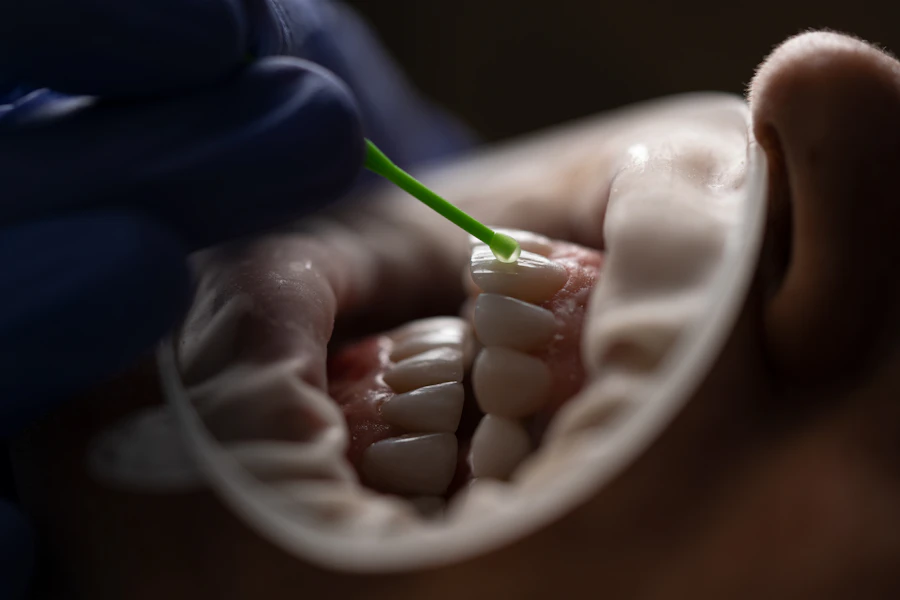
Can a Broken Tooth Be Repaired with Composite?
In most cases, yes. Small pieces broken off the edge of a front tooth, chipped corners and limited fractures involving the enamel and dentine can be repaired directly in the mouth with tooth-coloured composite. Because composite is bonded to the tooth, the work preserves the shape of the fractured surface, often without touching sound tissue, and is usually completed in a single visit. Not every fracture is the same, however: how deep it goes, whether it reaches the nerve (pulp) and how much of the tooth has been lost determine which method is appropriate.
Types of Fracture and When Composite Is Suitable
Enamel fractures and small chipped edges
These are small fractures affecting only the outermost layer, the enamel. They are usually painless; the tongue feels a sharp edge. They can be corrected by adding a thin layer of composite or, for very small chips, simply by smoothing the edge.
Fractures involving enamel and dentine
If the fracture reaches the dentine beneath the enamel, the tooth may become sensitive to cold and air, and a yellowish area may be visible on the broken surface. If the nerve is not exposed, these fractures are also mostly repaired with composite. Because sensitivity can increase while the dentine is left unprotected, it is advisable not to delay the repair for long.
Fractures reaching the nerve
A pinkish-red spot or bleeding on the broken surface may mean the nerve is exposed. In this case a procedure to protect the nerve or root canal treatment comes first, and the composite repair follows. If needed, a fibre post can be placed in the canal for additional retention.
Root fractures and vertical cracks
Fractures extending below the gum line and vertical cracks running along the root cannot be repaired with composite. These fractures are not always visible; sudden, sharp pain on biting is an important sign. An X-ray is needed for assessment, and treatment options depend on where the fracture lies.
How Is a Broken Tooth Repaired with Composite?
- Examination and X-ray: The depth of the fracture, its relation to the nerve and any damage to the root are assessed.
- Shade selection: Done at the start of the visit before the teeth dry out; dried enamel temporarily looks lighter.
- Isolation: Because composite bonding is affected by moisture, the working area is protected from saliva.
- Surface preparation: The broken edge is lightly shaped if necessary and an adhesive system is applied.
- Layering: Composite is placed in several layers that mimic the natural layered structure of the tooth, each hardened with light.
- Finishing: The shape is refined, the bite is checked and the surface is polished.
Small and medium-sized fractures are usually completed in a single visit. Anaesthesia may be needed for fractures reaching the dentine; for fractures limited to the enamel it is often not needed.
Can the broken piece be reattached?
If the broken piece has been found intact and the fracture is suitable, the piece can in some cases be bonded back onto the tooth. It is important that the piece does not dry out: keeping it in milk, saline or the person's own saliva and bringing it to the appointment is advised. A piece that has dried may change colour and bond less well.
What to Do First When a Tooth Breaks
- Rinse your mouth with lukewarm water; if there is bleeding, press gently with clean gauze.
- If you have found the broken piece, keep it in milk or saline.
- If there is swelling, apply something cold to the outside of the cheek.
- If a sharp edge is cutting your tongue or cheek, you can temporarily cover it with orthodontic wax, available in pharmacies.
- Avoid biting hard foods with the broken tooth and avoid very hot or cold food and drink.
If a fracture after a blow is accompanied by a loose or displaced tooth or another facial injury, it should be assessed without delay. Even in a tooth that looks intact, the nerve can be affected over time; the tooth darkening over the following months may be a sign of this. This is covered separately in the article on a tooth darkening after trauma. General information on emergencies is in the article on emergency toothache.
When Is Composite Not Enough?
If the fracture involves most of the tooth, if one of the chewing cusps of a back tooth has broken off, or if the tooth already has large fillings, a direct composite repair may not be sufficient against chewing forces. In that case a laboratory-made inlay or onlay or a crown is considered. Details of the decision are explained in the article filling or crown?
How Long Does the Repair Last?
How long a repair will stay in the mouth cannot be stated with certainty in advance. The size of the fracture, the position of the tooth, biting forces, clenching or grinding habits and diet all affect it. One advantage of composite is that if it chips again or wears, it can usually be repaired in the mouth. Avoiding habits such as cracking nuts, opening packaging or biting pens with the front teeth protects the repair. If there is a risk of impact during sport, wearing a mouthguard may be considered. For details of the procedure, see the composite bonding page.
Broken Teeth in Children
Front tooth fractures are common in children. In permanent teeth the root may not yet be fully developed, so protecting the nerve is especially important and assessment should not be delayed. For baby teeth, the approach depends on the size of the fracture, the child's age and the permanent tooth underneath.
This article is for general information and does not replace an examination by a dentist. The method used to repair a broken tooth is decided after a clinical examination and any radiographic assessment considered necessary.
Frequently Asked Questions
How many visits does it take to repair a broken tooth with composite?
Small and medium-sized fractures that do not reach the nerve are usually repaired in a single visit. If the fracture reaches the nerve, a procedure to protect the nerve or root canal treatment is done first; in that case the process may take more than one visit.
Is it a problem to wait if a broken tooth does not hurt?
No pain does not mean the fracture is unimportant. In fractures reaching the dentine, the exposed tissue may become sensitive and bacteria can progress towards the nerve; a sharp edge can also injure the tongue or cheek. Assessment of the fracture is therefore advised even without pain.
Can a tooth repaired with composite break again?
A composite repair is also a restoration exposed to force and can chip or wear. The risk depends on the size of the fracture, biting forces and habits such as clenching. An advantage of composite is that if it breaks, it can usually be repaired in the mouth.